There is a fine line between a “quick dinner” and a “quality dinner.” Often, sheet pan meals sacrifice texture for convenience, resulting in steamed vegetables and rubbery protein. But with the right technique, you can achieve the blistered char of a hot fajita skillet using nothing but your oven.
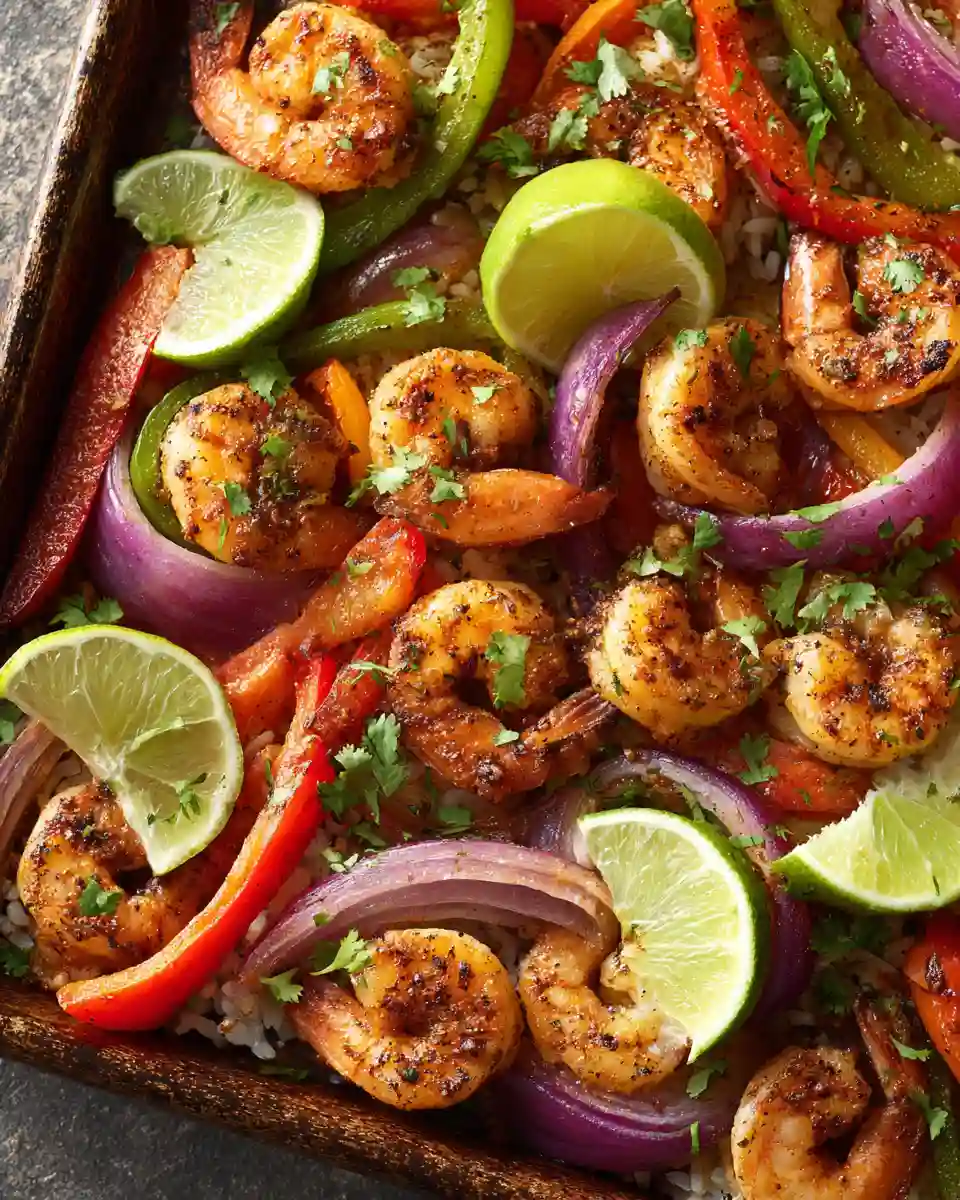
This Sheet Pan Shrimp Fajita Rice Bowls recipe is designed for efficiency without compromising culinary standards. The secret lies in high-heat roasting and strategic timing. We aren’t just tossing ingredients on a tray; we are ensuring the peppers caramelize at the edges while the shrimp remains plump and snappy. Served over fluffy, seasoned rice, this is a 30-minute meal that respects both your time and your palate.
The Chef’s Approach: Why This Works
- High Heat (425°F): Most home cooks roast at 350°F or 375°F. For fajitas, we need 425°F to mimic the sear of a cast-iron skillet.
- Dry Brining: We season the shrimp immediately, allowing the salt to denature the proteins slightly, improving moisture retention.
- Space Management: Overcrowding the pan creates steam. Spacing the vegetables ensures they roast properly, delivering that essential fajita sweetness.
Ingredients
The Protein & Veg:
- 1 lb large shrimp (21/25 count), peeled and deveined, tails removed
- 2 bell peppers (any color), sliced into 1/2-inch strips
- 1 large red onion, sliced into wedges
- 2 tbsp olive oil (or avocado oil for higher smoke point)
- 1 lime, cut into wedges for serving
- Fresh cilantro, chopped (garnish)
The Fajita Seasoning:
- 1 tbsp chili powder
- 1 tsp ground cumin
- 1 tsp smoked paprika (essential for that “grilled” flavor)
- 1/2 tsp garlic powder
- 1/2 tsp onion powder
- 1/2 tsp kosher salt
- 1/4 tsp black pepper
- 1/4 tsp cayenne pepper (optional, for heat)
The Rice Bowl Base:
- 2 cups cooked white rice or yellow rice (warm)
- 1 tbsp butter (optional, for finishing the rice)
- 1 tbsp lime juice
Instructions
- Preheat for Power:Preheat your oven to 425°F (220°C). Place your empty sheet pan inside the oven while it heats up. Chef’s Tip: A hot pan acts like a skillet, searing the vegetables the moment they touch the metal.
- Prep the Shrimp:Pat the shrimp completely dry with paper towels. Moisture is the enemy of browning. Place them in a bowl, drizzle with 1 tablespoon of olive oil, and toss with half of the fajita seasoning mixture. Set aside to marinate while you prep the veg.
- Season the Vegetables:In a separate bowl, toss the sliced bell peppers and onions with the remaining 1 tablespoon of olive oil and the rest of the seasoning. Ensure every strip is coated evenly to prevent drying out.
- The Sizzle Start:Carefully remove the hot sheet pan from the oven. Spread the vegetables in a single layer on the pan. You should hear a sizzle. Roast for 10 minutes.
- Add the Shrimp:Remove the pan from the oven. Push the vegetables slightly to the side (or scatter the shrimp on top if space is tight). Arrange the shrimp in a single layer. Return to the oven and roast for another 5–7 minutes, or until the shrimp are opaque and pink. Do not overcook—shrimp turns rubbery seconds after it is done.
- Assemble the Bowls:While the shrimp finishes, fluff your warm rice with a fork and stir in the lime juice and butter. Divide the rice into bowls. Top with the roasted shrimp, peppers, and onions. Garnish generously with fresh cilantro and a squeeze of fresh lime.
Success Strategy: Roasting vs. Steaming
Many sheet pan recipes fail because the ingredients “sweat” rather than roast. Here is the technical breakdown of how to avoid that:
| Element | The Mistake (Steaming) | The Fix (Roasting) |
| Moisture | Washing veg/shrimp and not drying them. | Pat dry thoroughly. Surface water must evaporate before browning can occur. |
| Spacing | Piling ingredients on top of each other. | Single layer. Use two pans if necessary. Air must circulate around each piece. |
| Temperature | Low oven temp (<400°F). | High heat (425°F+). This triggers the Maillard reaction for caramelization. |
Chef’s Note: If you want extra char on your vegetables, broil them on high for the final 60 seconds—but watch them closely!
3 Pro Tips for Restaurant-Quality Flavor
- Bloom Your Spices: If you have an extra minute, microwave your dry spice mix with the oil for 15 seconds before tossing it with the shrimp. Heat activates the essential oils in cumin and chili powder, making the flavor more potent.
- Acid is Key: Do not skip the fresh lime squeeze at the end. The roasted vegetables and shrimp are rich and savory; the acid cuts through that richness and brightens the entire dish.
- Rice Matters: Don’t treat the rice as an afterthought. Use a high-quality grain. If you want more flavor depth, try my Chicken and Yellow Rice Recipe technique or swap in a grain from this Shrimp Quinoa Power Bowl.
Common Mistakes to Avoid
- Using Pre-Cooked Shrimp: Never use pink, pre-cooked shrimp for this. They will become tough, dry leather by the time the peppers are done. Always use raw (gray/translucent) shrimp.
- Cutting Veggies Too Thin: If your bell peppers are paper-thin, they will burn before the onions soften. Aim for a uniform 1/2-inch thickness for consistent cooking rates.
- Cold Pan: Putting food on a cold sheet pan works, but putting it on a hot preheated pan ensures you get a sear on the bottom, adding texture that is usually missing from oven meals.
Frequently Asked Questions
Q: Can I use frozen shrimp?
A: Yes, but they must be fully thawed and dried first. Thaw them under cold running water for 10-15 minutes, then squeeze out excess water with paper towels. If you roast them from frozen, they will release too much water and steam your fajitas.
Q: How do I store and reheat leftovers without the shrimp getting rubbery?
A: Store in an airtight container for up to 3 days. To reheat, I recommend heating the rice and veggies first in the microwave. Add the shrimp in for only the last 20–30 seconds, just enough to warm them through. Alternatively, eat the leftovers cold as a salad!
Q: What if I don’t have a sheet pan large enough?
A: Use two smaller pans. It is better to wash an extra pan than to ruin the texture of your dinner by overcrowding a single one.
Q: Can I make this with chicken instead?
A: Absolutely, but the timing changes. Chicken breast strips need about 15–18 minutes. You can add them at the same time as the vegetables (Step 4). For a similar flavor profile, check out this Garlic Butter Shrimp recipe for comparison.
Q: Is this recipe gluten-free?
A: Yes, as long as your spices are pure (check blends for anti-caking agents containing wheat) and you serve it over rice. It is a naturally gluten-free meal.
Q: What else can I serve with this?
A: If you want to expand the meal, consider adding Sheet Pan Lemon Herb Salmon for a surf-and-turf option, or serve with a side of black beans.